
You know how to build websites. You understand user experience (UX), you can wrangle CSS, and you have an eye for design. But there is one massive hurdle standing between you and your new career: the chicken and egg problem.
You can’t get a client without a portfolio, but you can’t build a portfolio without a client.
It is the most common trap new web designers fall into. However, the reality is that business owners don’t buy portfolios; they buy solutions and trust.
If you are starting from zero, you don’t need a portfolio of past work to land your first paying client. You need a strategy. Here is the step-by-step guide to getting your first web design client when you have no case studies to your name.
Phase 1: The Mindset Shift (Before You Pitch)

Before you send a single email or make a single phone call, you must change how you view your current situation. Most beginners fail because they lead with their insecurity.
1. Stop Saying “I’m New.”
When you pitch, your prospect does not need to know you are new. Instead, focus on the fact that you are hungry, available immediately, and offering a fresh perspective.
2. Understand You Do Have a Portfolio
You might not have paid clients, but you likely have work to show. Did you build a mockup in Figma? A personal project? A site for a friend’s band? A template you customized?
- Spec work is your portfolio. If you haven’t done any, do one now. Pick a local business you like (a coffee shop, a gym) and redesign their current website. Put that in your portfolio. When a client asks, “What have you built?” you show them the redesign and say, “This is a concept I developed for a local business to demonstrate my approach to modern UI.”
Phase 2: Building Your Social Proof Without Past Clients
You need to establish credibility. Since you don’t have testimonials from previous clients yet, you need to borrow credibility or create it.
3. Create a “Concept Portfolio.”
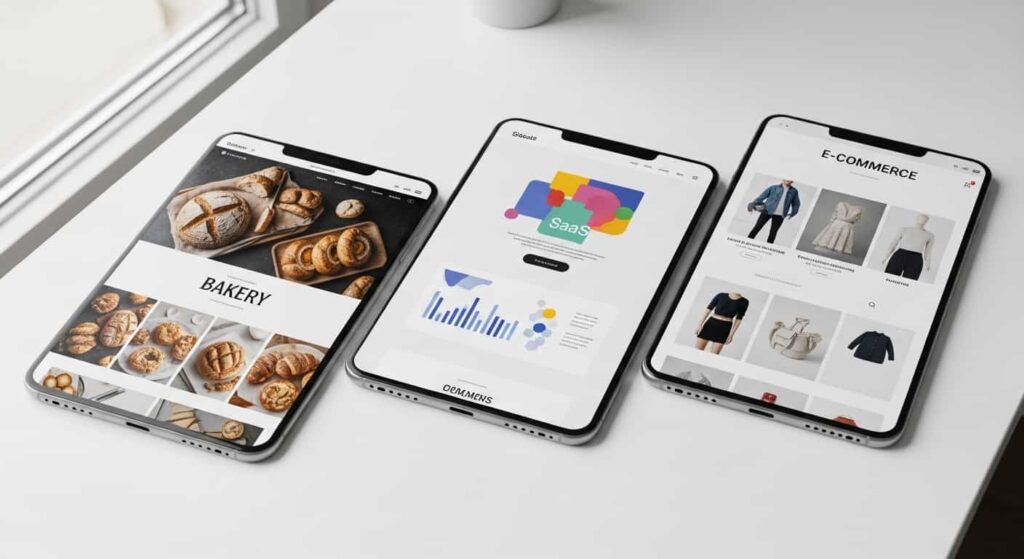
You need a website for yourself. On this site, do not list “0 projects completed.” Instead, create three case studies for conceptual projects.
- Project 1: A full redesign for a local bakery (explain why their old site hurt sales and how yours fixes it).
- Project 2: A landing page for a SaaS startup (focus on conversion flow).
- Project 3: An e‑commerce optimization for a niche store.
These serve as proof of your skills. When a client asks, “Do you have experience with e‑commerce?” you can point them to your concept project and explain your process.
📌 A note on transparency If a prospect asks whether these were paid client projects, be honest: “This was a design concept I created to demonstrate my approach for businesses in your industry. I don’t claim it as a paid project—it’s a showcase of my capabilities.” Most business owners respect honesty and will judge you on the quality of the work, not on whether it was commissioned.
4. Leverage Your Network (The Warm Start)
Your first client is rarely a cold lead. It is usually someone who already knows, likes, and trusts you.
- Make a list: Write down 20 people you know: former colleagues, family friends, the owner of the gym you go to, your hairstylist, your dentist.
- The soft ask: Do not say, “I’m a web designer now, hire me.” Instead, say, “Hey, I’ve recently launched my web design business. I’m looking for my first few clients to fill up my portfolio. I’m offering a significant discount to the first three people in my network who need a site refresh. Do you know anyone who might be struggling with their current website?”
Phase 3: The Outreach Strategy (The “Audit” Method)
Cold emailing “Hi, I build websites” usually ends up in the spam folder. To get your first client with no portfolio, you must provide value before asking for money. This is called the Value-First Approach.
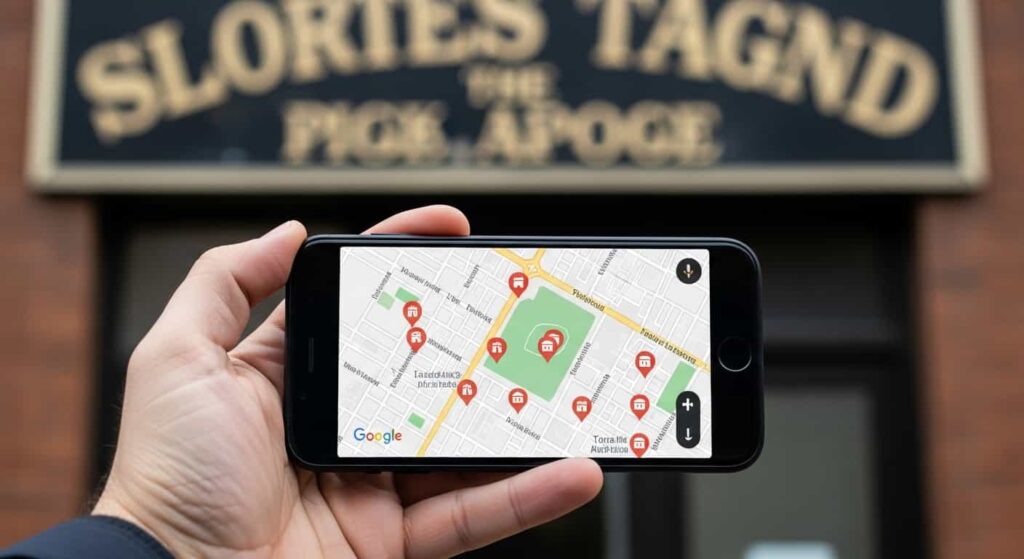
5. Find the Right Prospects on Google Maps
Open Google Maps. Search for “plumber,” “lawyer,” “dentist,” or “contractor” in your local area. Look for businesses that have:
- A terrible website (looks like it’s from 2005).
- No website listed at all.
- A GMB (Google My Business) profile with recent reviews (this shows they care about their online presence, but lack the technical skill to fix the site).
6. The “Free Audit” Pitch
Instead of asking for a job, offer a free audit. This demonstrates expertise and highlights their pain points.
The Script:
Subject: Quick thought on [Business Name]’s site
Hi [Name],
I was looking for a [plumber/dentist] in [City] and came across your business. I noticed you have great reviews, but I struggled a bit to find your contact info on your website.
I’m a web designer currently taking on a few local clients, and I put together a quick 3‑point audit of your site to help you convert more visitors.
- Your site isn’t mobile‑friendly (over 60% of users are on mobile).
- Your call‑to‑action is below the fold.
- Your load time is slow, which hurts your Google ranking.
If you’d like, I’d be happy to send over a mockup of what a modern version of your site could look like. No obligation—just wanted to help out a local business.
Best, [Your Name]
7. The “Mockup” Close
If they reply, you are in. Since you have no portfolio, you will create a mockup for them (using Figma, Webflow, or even a simple Photoshop edit) based on their current content.
- Why this works: You are showing them the future. When they see their own business looking sleek and modern, the fear of hiring a new designer disappears. They aren’t buying your past; they are buying the vision you just showed them.
Phase 4: Overcoming Objections

When you have no portfolio, clients will inevitably ask, “Can you show me examples of your work?”
8. How to Answer the “Portfolio” Question
Never say, “I don’t have any.” Instead, use one of these rebuttals:
- The Specialization Angle: “My past work is mostly in the corporate space/NDA‑protected projects, so I can’t publicly display them. However, I’m shifting my focus to local small businesses like yours. I’ve put together a few mockups for businesses similar to yours to show you my design style. Let me show you those.”
- The Honest Confidence Angle: “I am currently building my portfolio. While I don’t have live sites to show you yet, I have extensive training in modern web standards. To make you feel comfortable, I’m willing to structure the contract so that you don’t pay the final deposit until you see the first draft of the homepage live. If you don’t love it, you owe me nothing.”
- The Process Angle: “I actually don’t lead with a portfolio because I’ve found that every business is unique—what worked for a coffee shop rarely translates to a law firm. Instead, I focus on your specific goals. Here’s a quick mockup I made for you based on your current site. If you like where this is headed, we can move forward. If not, no hard feelings.”
Phase 5: The Offer & Pricing
Since you are new, you need to reduce the risk for the client. You also need to price yourself to get the win, but not so low that you look like a scammer.
9. Use the “Beta Tester” Offer
Position yourself as a specialist who is currently offering a “launch special.”
- The Offer: “I’m currently accepting three beta clients to refine my process. You get a full, responsive, 5‑page website for a flat rate of $X (typically 50% of market rate). In exchange, you agree to give me a video testimonial and allow me to use your site in my portfolio.”
- Why this works: It frames your lack of portfolio as a limited time opportunity for them, rather than a liability for you.
⚠️ Set clear boundaries Even at a discount, define the scope upfront: number of pages, number of revision rounds, and deliverables. Put the testimonial expectation in writing. A simple line in your agreement like “Client agrees to provide a short video testimonial and approves the site for use in my portfolio upon successful launch” protects you and keeps the exchange professional.
10. Structure the Contract to Build Trust

Do not ask for 50% upfront if you have no reputation. Ask for a smaller deposit (e.g., $100–$200) to cover your initial time, and structure the payment in milestones:
| Milestone | Payment | Trigger |
|---|---|---|
| 1 | Deposit (e.g., $200) | Contract signed |
| 2 | 25% | Design mockup approved |
| 3 | 25% | Development on staging server |
| 4 | 50% | Site launch (before handing over admin access) |
This milestone‑based structure reduces perceived risk and shows you’re confident enough to earn payments as you deliver value.
Phase 6: Leveraging the First Win
Once you land that first client, your goal is to turn that one project into a portfolio that lands you the next five.
11. Over‑Deliver on Customer Service
Since your design skills might be raw, compensate with exceptional communication. Reply to emails within the hour. Explain technical concepts in plain English. Deliver the project two days early.
- Why: The testimonial you get from this first client is worth more than the money they paid you. A 5‑star Google Review or a video testimonial saying “He was responsive, easy to work with, and made the process painless” will close future clients faster than any screenshot.
12. Ask for Referrals Immediately

After you launch, ask: “I’m so glad you love the site. Do you know three other business owners in your network who struggle with their website? I’d love to help them out, too.”
What If They Say No (or Don’t Reply)?

Rejection is not failure. If a prospect declines, reply graciously:
“No problem at all. If you change your mind or know someone else who’s struggling with their site, feel free to pass my info along.”
Then add them to a follow‑up list. Reach back out in 3–6 months with a new observation about their site. Persistence with value—not spam—is how beginners build momentum.
Conclusion: Your First Client is Closer Than You Think
Waiting until you have a portfolio is a trap. The only way to build a portfolio is to do the work. By shifting your focus from selling design to solving business problems—and using strategies like the free audit, the mockup, and the beta tester offer—you can bypass the portfolio requirement entirely.
Your first client is not looking for a designer with 100 projects under their belt. They are looking for someone who listens, communicates clearly, and can make their business look professional online. You can do that right now.
Your next step: Open Google Maps, find three local businesses with bad websites, and send them the audit email template above. Your first client is out there—not because you have a portfolio, but because there are thousands of business owners with outdated websites who need exactly what you can offer.