Last Updated on April 2, 2026 by umarbwn
Most freelancers and web agencies lose the deal before they ever open their laptops.
They walk into a local business, start talking about “responsive design,” “SEO,” and “conversion rates” — and watch the owner’s eyes glaze over in real time. The business owner doesn’t care about technology. They care about customers, revenue, and not wasting time.
This guide gives you a word-for-word script to pitch a local business a new website — using a “free audit” opener that creates instant credibility and gets a yes in under two minutes. No pushy sales tactics. No jargon. Just a conversation that feels helpful instead of salesy.
Why Most Website Pitches Fail Instantly

Here’s the hard truth: local business owners have been burned before. They paid someone $500 for a website that does nothing. Or they hired a nephew who “knows computers.” They’re skeptical, busy, and protective of their time and money.
The biggest mistake freelancers make? Leading with the product instead of the problem.
“I build websites” is a commodity statement. Every person on Fiverr builds websites. But “I found three things on your site hurting your Google ranking — want me to show you?” is a conversation starter.
That’s what the free audit opener does. It shifts you from salesperson to trusted advisor in the first 90 seconds.
Before You Walk In: The 5-Minute Pre-Visit Research Checklist

Do this before any pitch — in person, by phone, or via email. It takes five minutes and gives you real ammunition.
Check these five things:
- Google their business name — Do they appear in the local pack (map results)? If not, that’s a problem worth mentioning.
- Open their website on your phone — Does it load slowly? Is it mobile-friendly? Half of all local searches happen on mobile.
- Check their Google Business Profile — Is it filled out? Missing hours, photos, or a website link?
- Run their URL through Google PageSpeed Insights (pagespeed.web.dev) — Screenshot the score. Below 50 is a red flag you can point to.
- Look at their competitor — Find a local competitor with a sharper site. You’ll reference this without naming names.
Write down two or three specific findings. You’re not selling a website yet — you’re showing up with answers.
The Word-for-Word Pitch Script
This script is built for in-person cold visits, but the same structure works for cold calls or DMs. The four phases take the conversation from opener to close without ever feeling like a hard sell.
Phase 1: The Free Audit Opener (90 Seconds to Get the “Yes, Tell Me More”)
Walk in, greet the owner or manager, and say this:
“Hey, I’m [Your Name]. I do web design for local businesses in [City]. I actually pulled up your website before stopping in — hope that’s okay — and I noticed a couple of things that might be costing you phone calls. Do you have literally two minutes? I just want to show you what I found.”

Why this works:
- “I pulled up your website before stopping in,” signals you did homework, not a cold spam blast.
- “Costing you phone calls” speaks to their actual pain — lost revenue, not web design theory.
- “Literally two minutes” removes the fear of a long sales meeting. They can always say no after two minutes.
If they say “I’m busy right now”:
“Totally understand — I’ll leave my card. But just so you know, the main issue is your site isn’t showing up on mobile Google searches. When’s a better time to walk you through it? Takes five minutes max.”
Phase 2: The Discovery Questions (Find the Real Pain)
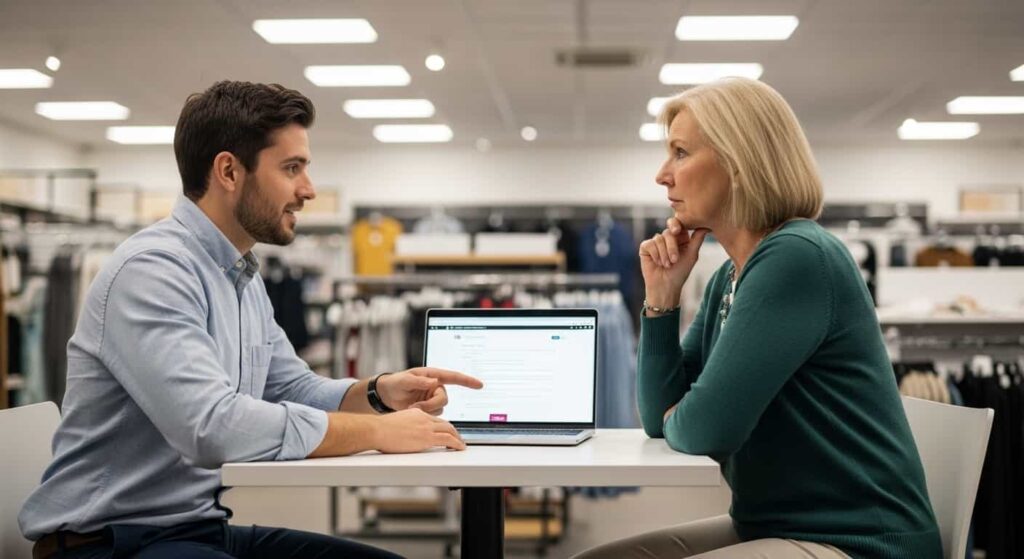
Once they say yes, don’t pitch yet. Ask questions. This is where most deals are won.
Sit down (or stand at the counter if it’s casual) and open your laptop or phone to their site. Walk through what you found, but frame it as a conversation, not a lecture.
“So right now, if someone in [City] searches for [their service] on their phone, here’s what comes up.”
(Show them their Google ranking — or the fact that they’re on page 2 or invisible in the local pack.)
“Do you get most of your new customers from Google, word of mouth, or something else?”
Let them answer. Then follow up with:
“And when someone does find you online, do they typically call, come in, or fill out a form?”
And one more:
“Has anyone ever mentioned your website to you — like a customer saying they couldn’t find your hours, or had trouble on their phone?”
These questions do two things. First, they help you understand the business. Second, they help the owner connect the dots themselves. You’re not telling them they have a problem — they’re realizing it.
Phase 3: The Value Frame (Make the Solution Obvious)
Now you anchor the conversation to their goals — not features, not design awards, not technology.
“Here’s what I’d put together for you. A clean, fast-loading site that works perfectly on phones — because that’s where most local searches happen. It would show your services, hours, photos, and make it dead simple for someone to call or get directions. I’d also make sure your Google listing is tied in properly so you actually show up when people search.”
Pause. Then say:
“Most businesses I work with start seeing more calls within the first 30 to 60 days after launch, just from cleaning up the mobile experience and the Google connection.”
What you just did: You painted a specific, believable outcome (more calls in 30–60 days) tied to something they already care about (customers finding them). You didn’t say, “I’ll build you a beautiful website.” You said, “Here’s what changes for your business.”
Phase 4: The Close (Make It Easy to Say Yes)

Don’t leave the meeting without asking for a decision or a next step. Many freelancers do a great job and then say, “Let me send you a proposal,” and disappear. The deal dies in the inbox.
Instead, do this:
“I can put together a quick mockup of your new homepage — just to show you what the direction could look like — at no cost and no obligation. If you like it, we talk numbers. If not, you keep the mockup and there’s zero pressure. Fair enough?”
This is the low-commitment close. You’re not asking them to sign a contract. You’re asking them to look at something. Almost no one says no to that.
If they ask about price:
“Depends on exactly what you need, but for a local business site like yours — maybe 5 to 8 pages, contact form, Google integration — I typically land somewhere between $[X] and $[Y]. Once I see the full scope, I’ll give you an exact number. No surprises.”
(Fill in your real range. Don’t dodge the question — business owners respect directness.)
Roleplay Breakdown: Handling the 4 Most Common Objections

Objection 1: “I already have a website.”
“I know — that’s actually why I stopped in. I looked at it, and the issue isn’t that you don’t have one. It’s that it’s not showing up on mobile searches, which is where most people in [City] are looking right now. Your site exists, it’s just not working as hard as it should be.”
Objection 2: “I’m not looking to spend money right now.”
“Totally fair. That’s why I’m not asking you to spend anything today. Let me show you the free mockup first — it costs you nothing, and you’ll at least see what’s possible. You can always decide later.”
Objection 3: “I had someone do my website, and it was a disaster.”
“That’s more common than you’d think, and I get why you’d be hesitant. Can I ask — what happened? Was it communication, the final product, or something else?”
(Listen fully. Then:)
“What I do differently is [your specific process — e.g., weekly updates, you own your domain, no disappearing after launch]. I’d rather you feel in control the whole time than hand it off and hope for the best.”
Objection 4: “I need to think about it / talk to my partner.”
“Absolutely. Here’s what I’ll do — let me put together that quick mockup so you have something concrete to look at together. That way it’s not just a concept, it’s something real you can react to. I’ll have it to you by [specific day].”
The Follow-Up Script (48-Hour Rule)
If you left without a definite yes, follow up within 48 hours. Any longer and the moment is gone.
Email or text:
“Hey [Name], [Your Name] here — stopped by [Business Name] on [day]. I put together that quick homepage concept I mentioned. Mind if I send it over? Takes 30 seconds to look at and might spark some ideas.”
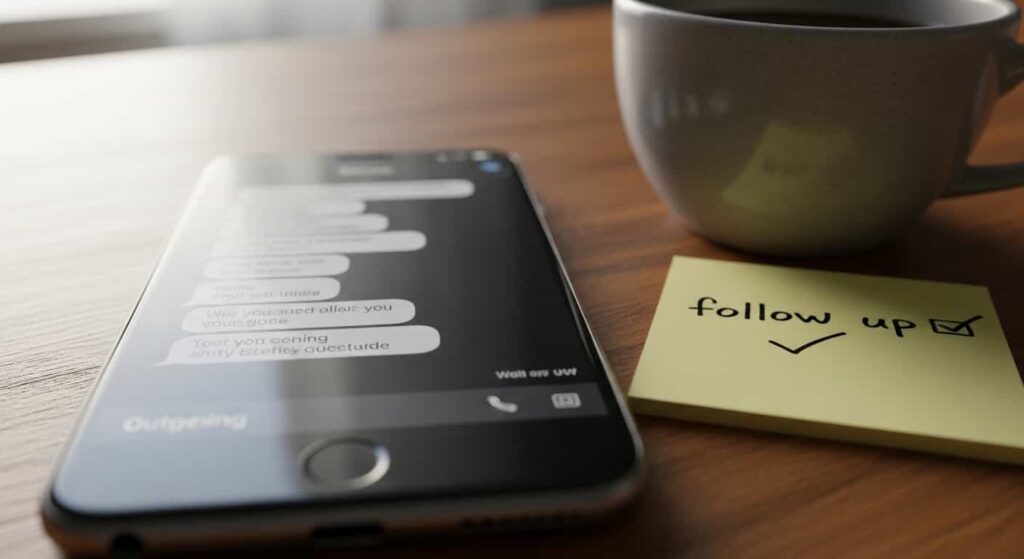
Keep it short. Don’t re-pitch. Just lower the barrier to the next step.
Key Principles to Carry Into Every Pitch
- Talk about outcomes, not outputs. Don’t say “I’ll build 6 pages.” Say, “You’ll get more calls from people searching on their phone.”
- Show, don’t tell. Bring real screenshots: their PageSpeed score, their Google ranking gap, and a mobile view. Evidence beats enthusiasm.
- Get specific about your city. Saying “[City] searches” three times in a pitch grounds the conversation in their actual world.
- Never over-promise. If you say, “You’ll rank #1 on Google in a week,” you lose credibility immediately. Say “most clients see improvement in 30–60 days” — that’s believable.
- The goal of the first visit is the next meeting, not the contract. Remove pressure from yourself and the prospect.
Frequently Asked Questions
What should I charge for a local business website?
For a standard 5–8 page local business website with contact form, mobile optimization, and basic SEO setup, most freelancers charge between $800 and $3,000, depending on complexity, location, and their own experience level. Start with a price you’re confident defending, and raise it as you build a portfolio.
How do I find local businesses to pitch?
Start with businesses that have outdated or missing websites: restaurants, contractors, salons, dental offices, chiropractors, law firms, and auto shops. Drive or walk your own neighborhood. Search Google Maps for your city + service category and filter by businesses with no website listed or a poor mobile experience.
How do I do a free website audit without being a technical expert?
You don’t need to be technical. Google PageSpeed Insights gives you a score in seconds. Google the business name and check if they appear in the local map pack. Open their site on your phone and note whether it loads fast and looks good. That’s enough for a credible first conversation.
What if the business already works with a web agency?
Acknowledge it, then differentiate: “That makes sense. My question would be — when did they last update the mobile experience? That’s usually where older sites fall behind.” Position yourself as a specialist, not a replacement.
Should I pitch in person or by phone?
In-person wins for local businesses. Walking in with a printed screenshot or pulling up their site on a laptop creates a tangible, memorable moment that a cold call can’t replicate. Use phone and email only when geography makes in-person impractical.
Ready to Pitch? Start Here.
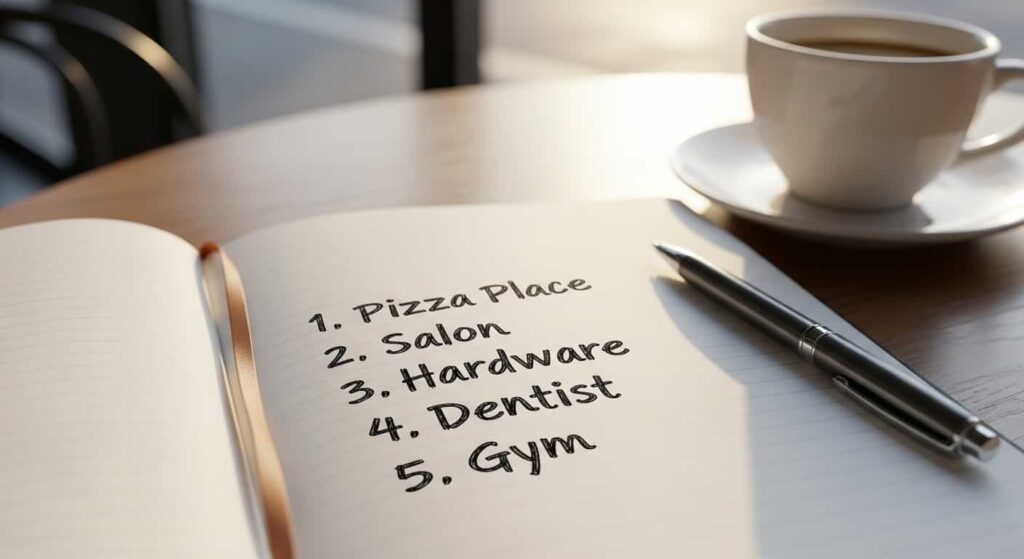
Pick five local businesses in your area this week. Spend five minutes on each one before you walk in. Use the opener exactly as written until it feels natural — then adapt it to your voice.
The freelancers who land local clients consistently aren’t the best designers. They’re the ones who show up prepared, speak in outcomes, and make it easy to say yes.
You now have the script. The next move is yours.