Last Updated on April 2, 2026 by umarbwn
You spent three hours writing a proposal on Upwork. You bid your best rate. You lost to someone charging $8/hour from a country where that’s a livable wage. Sound familiar?
Upwork isn’t broken — it’s just not built for you anymore. It was designed for volume, and volume means price wars. If you’re a skilled web developer trying to grow a sustainable freelance business or land quality long-term clients, you need to be fishing in different waters.

The good news: there are more high-quality places to find web development clients in 2026 than ever before. The bad news: most lists just dump 20 platform names on you without telling you which ones are actually worth your time.
This article does things differently. Every platform below is ranked by effort-to-reward ratio — meaning, how much work does it take to land a client, and how much do you get in return? Whether you’re just starting or scaling from 2 to 10 clients, this breakdown will tell you exactly where to focus.
Why You Should Stop Relying on Upwork (and What to Do Instead)
Upwork isn’t dead — but it has real structural problems for skilled developers:
- Race to the bottom pricing: Algorithms reward lower bids in many categories
- 20% service fee on your first $500 with any client (drops to 10% then 5% as you earn more, but still significant)
- Connects pay-to-play model: You spend credits just to submit proposals, with no guarantee of even being read
- Commoditization: You’re listed next to hundreds of competitors with similar profiles
The developers winning on Upwork in 2026 are either already established with strong reviews or they’re willing to operate at razor-thin margins to build momentum. Neither scenario is a good entry point.
Here’s where to go instead.
How We Ranked These Platforms
Each platform is rated on:
- Effort Score: How hard is it to get started and land your first client? (1 = easy, 5 = hard)
- Reward Score: What’s the quality and pay potential of clients you find? (1 = low, 5 = high)
- Effort-to-Reward Ratio: The higher this is, the better the platform’s ROI for your time
1. LinkedIn Direct Outreach

Effort Score: 3/5 | Reward Score: 5/5 | Ratio: Very High
LinkedIn is the single best channel for finding high-paying web development clients in 2026, and most developers use it wrong. They either spam connection requests or just post content and wait. Neither works.
What does work is targeted, personalized outreach combined with a profile optimized to convert visitors.
Here’s the reality: LinkedIn generates 80% of all B2B social media leads. InMail response rates hover between 10–25% when personalized — that’s 5x better than cold email. And unlike Upwork, you’re approaching decision-makers directly, with zero middleman fees.
How to use it effectively:
- Optimize your profile as a landing page — Your headline should speak to outcomes, not your job title. “I help SaaS startups cut page load time by 60%” beats “Freelance Web Developer” every time.
- Define your ICP (Ideal Client Profile) — Are you targeting e-commerce founders? SaaS companies under 50 employees? Local service businesses? Pick one and focus.
- Engage before you pitch — Comment meaningfully on 3–5 of their posts before sending a connection request. This warms the relationship.
- Use a 3-touch sequence — Connection request on Day 1, value-added message on Day 3 (share something useful specific to their business), soft ask on Day 7.
- Keep messages under 100 words — Decision-makers get 200+ LinkedIn messages a week. Brevity is respect.
Realistic timeline: Most developers who execute this consistently land their first LinkedIn client within 30–60 days.
Best for: Developers targeting SMBs, SaaS startups, or agencies for ongoing retainer work.
2. Contra
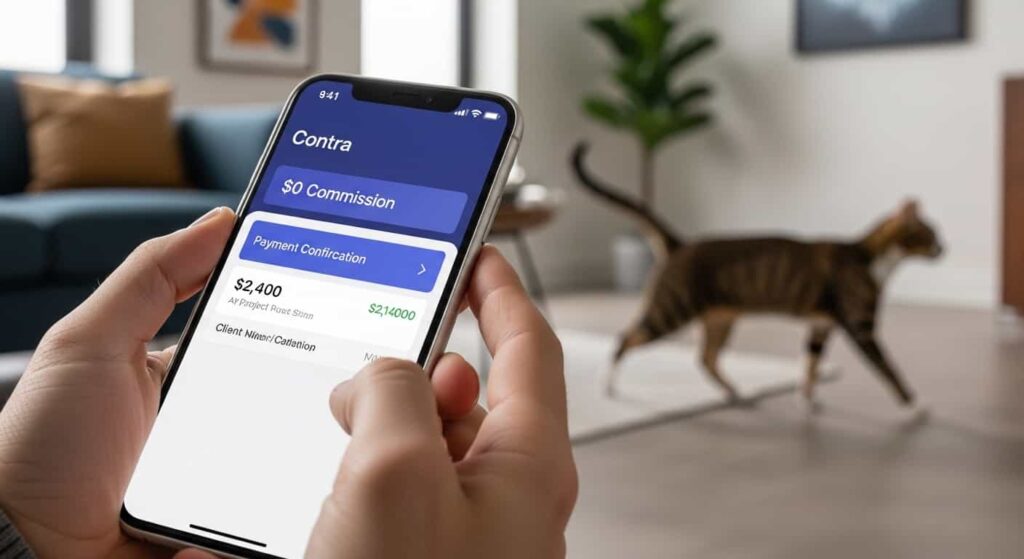
Effort Score: 2/5 | Reward Score: 4/5 | Ratio: Very High
Contra is the biggest disruptor in freelancing right now, and if you haven’t set up a profile yet, you’re leaving money on the table.
The headline feature: 0% commission. Contra keeps nothing from your earnings. On Upwork, you’d pay $200–$400 in fees on a $2,000 project. On Contra, you pocket the full amount.
Beyond the fee structure, Contra has quietly built some genuinely useful tools:
- Indy AI (available on the $29/month Pro plan): Scans your LinkedIn and X connections to surface warm leads — people in your network who are likely to need a developer. This alone can replace hours of manual prospecting.
- Payments in 1–2 business days (vs. the 10–14 days standard on most platforms)
- Built-in contracts, invoicing, and milestone management
- Over 1 million independent professionals are already on the platform
The platform skews younger and more tech/creative forward, which means clients here tend to understand what good work costs. You won’t be negotiating with someone who thinks a full website costs $200.
Best for: Independent developers who want to keep 100% of their earnings and reduce admin overhead.
3. Toptal

Effort Score: 5/5 | Reward Score: 5/5 | Ratio: High (long-term)
Toptal is genuinely elite — they claim to accept only the top 3% of applicants, and they mean it. The application process involves multiple rounds: a language/communication screen, a timed algorithm test, a live technical interview, and a paid test project with a real client.
It’s brutal. But if you pass, the reward is real:
- Frontend React developers on Toptal typically bill $65–$200+/hour
- Clients are enterprises, funded startups, and established companies with real budgets
- Toptal was rated #1 Most Reliable Professional Services Company in America by Newsweek in 2026
- Average client matching takes under 24 hours once you’re in the network
The effort-to-reward ratio is lower upfront because of the demanding screening process, but once you’re accepted, it functions more like a job placement service than a bidding marketplace. You get matched to clients — you don’t chase them.
Best for: Senior developers with 4+ years of experience who can pass a rigorous technical screen.
4. Gun.io
Effort Score: 3/5 | Reward Score: 4/5 | Ratio: High
Gun.io is a curated marketplace of 3,000+ pre-verified senior developers focused almost exclusively on the U.S. market. If you’re U.S.-based (or can work U.S. hours), this is one of the better premium platforms to be on.
Unlike Upwork’s open bidding, Gun.io uses bi-directional matching — their team vets you, then matches you with clients based on skills, availability, and culture fit. You’re not competing against 200 proposals; you’re being presented as a recommended candidate.
The platform provides real-time market compensation data so you’re never guessing what to charge. Clients on Gun.io tend to be tech-forward companies and startups that value quality over cost, which means less negotiation pressure on your rates.
The application process includes a portfolio review and technical assessment, but it’s significantly less intense than Toptal.
Best for: Experienced U.S.-based developers (or those available in U.S. time zones) targeting $75–$150/hour engagements.
5. Clutch.co
Effort Score: 3/5 | Reward Score: 4/5 | Ratio: High
Clutch is the B2B equivalent of Yelp — it’s where business owners go to find and vet web development agencies and freelancers using verified client reviews. It’s primarily used by decision-makers with real budgets doing serious due diligence before hiring.
The key difference from other platforms: clients come to you. Once your profile is set up with verified reviews and portfolio work, inbound inquiries come naturally. This is a long-game play, but the ROI compounds over time.
Getting your first reviews takes effort — you need to ask past clients to leave verified reviews through Clutch’s process. But once you have 5–10 reviews with solid ratings, your profile becomes a lead magnet.
Clutch also has an AI-powered matching system that recommends providers to clients based on budget, industry, and location.
Best for: Agencies or established freelancers with a track record of client work who can collect verified reviews. Less suitable if you’re brand new.
6. Indie Hackers and Product Hunt
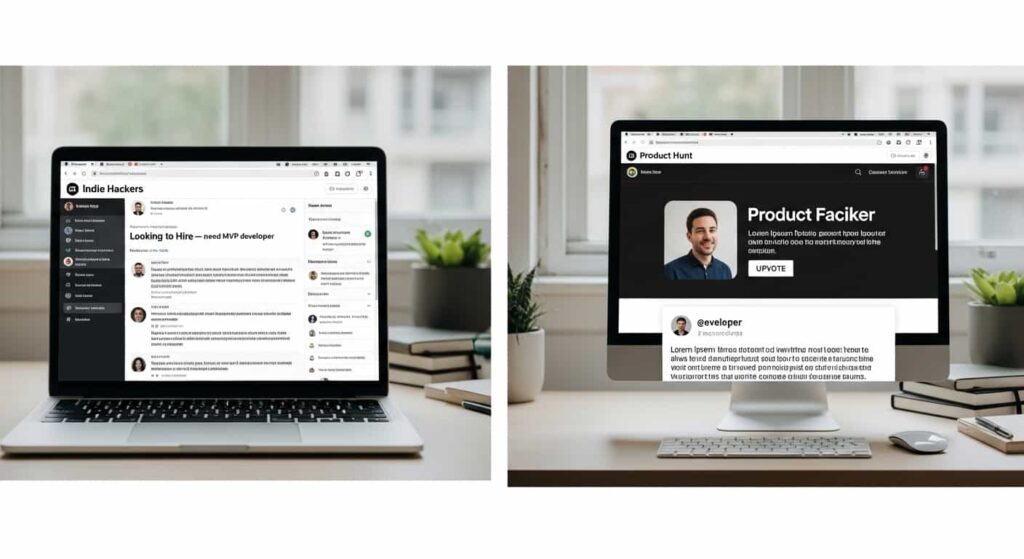
Effort Score: 2/5 | Reward Score: 4/5 | Ratio: Very High
These two platforms are where startup founders hang out. And startup founders constantly need web developers — for MVPs, landing pages, performance improvements, and product work.
Indie Hackers has a dedicated “Looking to Hire” forum and a regular meetup culture. Founders here are bootstrapped or early-stage, meaning budgets vary — but the projects are genuinely interesting, and founders who find good developers through Indie Hackers often become long-term repeat clients.
Product Hunt has a Makers community and regular launches where founders are visibly active. Comment thoughtfully on launches in your niche, engage in the community, and your name starts to become recognizable. Developers who are regulars in these communities report inbound inquiries without any active prospecting.
Tactics that work:
- Post an “Available for Hire” thread in Indie Hackers with your specialty and availability
- Leave detailed, genuinely helpful comments on Product Hunt launches in your niche
- Build in public — share your work as a developer working on client projects (with permission) or side projects
Best for: Developers targeting startup founders for MVP, product, or SaaS development work.
7. Niche Remote Job Boards
Effort Score: 1/5 | Reward Score: 3/5 | Ratio: High
Upwork isn’t the only job board — it’s just the loudest one. Niche job boards filter out the noise and connect you with clients who have already decided to hire remotely and pay fair rates.
Top picks for web developers in 2026:
- We Work Remotely — One of the largest remote job boards. Clients post roles with salaries disclosed; web development is consistently one of the top categories.
- Remote.co — Curated remote roles with a higher signal-to-noise ratio than general boards.
- LeadHawk — A smart aggregator that scans Reddit, Hacker News, Remotive, RemoteOK, and more every 2 hours. Let’s you set alerts so you see new postings before the rush. Paid plans start at $12/month.
- Hacker News “Who is Hiring?” thread — Posted on the first of every month. Some of the best technical companies in the world post here. Read the thread carefully and apply only where you’re a strong fit.
The effort here is intentionally low — you’re scanning curated listings, not cold prospecting. The tradeoff is that these are competitive, and you won’t always get a response. Treat this as a supplementary channel, not your primary one.
Best for: Developers who want a low-maintenance channel to run in parallel with active prospecting.
8. Reddit Communities
Effort Score: 2/5 | Reward Score: 3/5 | Ratio: Medium-High
Reddit has a surprisingly active ecosystem for freelance web developers, and clients genuinely do post there — often frustrated ones who got burned by Upwork contractors and are looking for alternatives.
The best subreddits to monitor and engage in:
- r/forhire — Direct hire posts from clients. Browse daily and reply fast; threads move quickly.
- r/startups — Founders sharing problems and progress. Engage helpfully; don’t pitch.
- r/EntrepreneurRideAlong — Bootstrapped founders. High intent to hire when they have a problem.
- r/webdev — Peer community, but occasional client posts slip through. Also great for visibility.
- r/FreelanceProgramming — Direct hire and collaboration posts.
The key to Reddit is giving before taking. Post genuinely helpful answers to development questions, share useful tools, and help people debug their thinking. When you’ve built some reputation in a subreddit, your availability posts get taken seriously. If you parachute in only to pitch, you’ll get downvoted into irrelevance.
Best for: Developers willing to invest time in community building for medium-term returns.
9. Discord Developer and Startup Communities
Effort Score: 3/5 | Reward Score: 3/5 | Ratio: Medium-High
Discord has become a serious professional networking tool, not just a gamer chat platform. In 2026, dozens of active communities exist where founders, product managers, and developers connect and collaborate — and where hiring happens organically.
High-value communities to join:
- Devs For Hire & Jobs — 26,000+ members, moderated to prevent scams, focused exclusively on job postings and developer-client connections
- Indie Worldwide — Bootstrapped founders community with frequent collaboration and hiring threads
- Startup Study Group — Founders at various stages who regularly need technical help
- Design+Code communities — Cross-disciplinary groups where designers often need developer partners for client work
The effort on Discord is relationship-driven. You’re not responding to listings; you’re becoming a trusted presence in a channel. Share your expertise, answer questions in #general, help debug in #code-help channels, and when you mention you’re available for freelance work, people already know your quality.
Best for: Developers who enjoy community engagement and relationship-building as part of their business development.
10. Cold Email Outreach to Niche Businesses

Effort Score: 4/5 | Reward Score: 5/5 | Ratio: High (long-term)
Cold email has the highest ceiling of any channel on this list — but also the steepest learning curve. Done right, it’s how freelance developers build $10,000+/month businesses without touching a single marketplace.
The secret to cold email in 2026 isn’t volume — it’s precision targeting. Here’s the system that works:
Step 1: Define a hyper-specific niche. Don’t email “small businesses.” Email “independent insurance agencies in Texas with outdated websites.” The more specific, the higher your response rate.
Step 2: Find 50–100 targets. Use Google Maps, LinkedIn search, or tools like Hunter.io to find the right contact (ideally the owner, not a general inbox).
Step 3: Write emails under 100 words. The formula: one observation specific to their business + one relevant result you’ve achieved + one low-friction ask (“Would a 15-minute call this week make sense?”).
Step 4: Follow up 3 times. 50–70% of replies come from follow-ups. Space them 3–5 days apart. Keep each one brief.
Realistic conversion rates: Expect roughly 1–3% of cold emails to convert to a discovery call. Of those, 30–50% typically become paying clients if you handle the call well. So 100 targeted emails could yield 1–3 clients.
Best for: Developers serious about building a full freelance business who want complete control over their pipeline.
Quick Comparison: Effort-to-Reward at a Glance
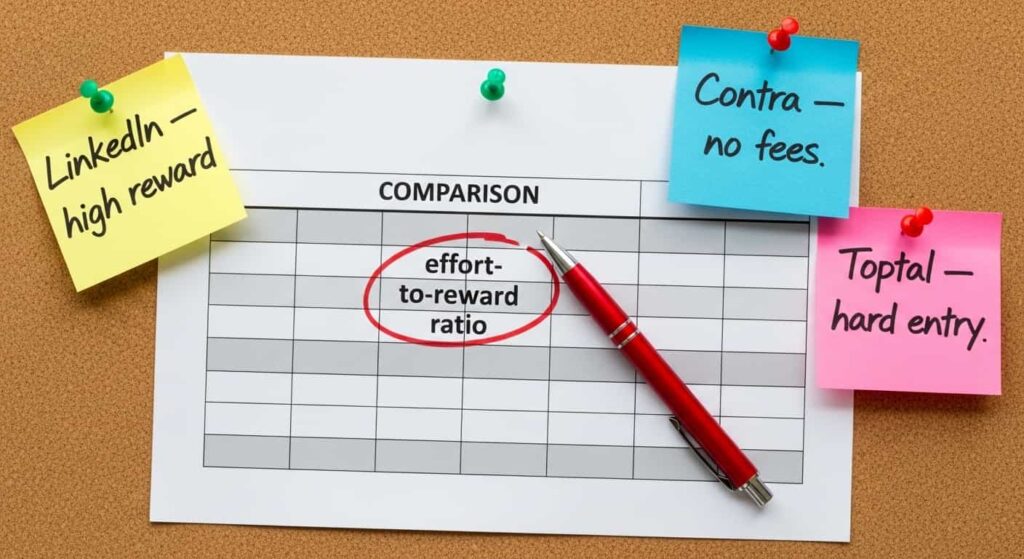
| Platform | Effort | Reward | Best For |
|---|---|---|---|
| LinkedIn Outreach | Medium | Very High | B2B, SaaS, SMB clients |
| Contra | Low | High | Keeping 100% of earnings |
| Toptal | Very High | Very High | Senior devs, enterprise work |
| Gun.io | Medium | High | U.S.-based senior developers |
| Clutch.co | Medium | High | Agencies, established freelancers |
| Indie Hackers / Product Hunt | Low | High | Startup MVP and product work |
| Niche Job Boards | Very Low | Medium-High | Supplementary channel |
| Reddit Communities | Low-Medium | Medium | Community-first prospecting |
| Discord Communities | Medium | Medium-High | Relationship-based pipeline |
| Cold Email Outreach | High | Very High | Building a full client pipeline |
The Right Strategy: Don’t Pick One, Build a Stack
The developers consistently finding great clients in 2026 aren’t relying on a single channel. They run a client acquisition stack — typically 2–3 active channels that complement each other:
Starter Stack (0–1 years freelancing):
- Reddit/Discord communities (build presence and get early clients)
- Contra (set up profile, start collecting work)
- Niche job boards (apply to 3–5 relevant listings per week)
Growth Stack (1–3 years freelancing):
- LinkedIn outreach (3–5 personalized messages per day)
- Indie Hackers presence (post regularly, engage authentically)
- Cold email (target one niche, 20 emails/week)
Scale Stack (3+ years freelancing):
- Toptal or Gun.io (passive inbound from vetted marketplace)
- Clutch.co (reviews driving inbound leads)
- LinkedIn (brand-led inbound, fewer cold pitches needed)
Frequently Asked Questions
What is the best alternative to Upwork for web developers in 2026?
LinkedIn direct outreach offers the highest effort-to-reward ratio for most web developers. It requires personalized work but connects you directly with decision-makers, with no platform fees and no bidding competition. For a marketplace alternative with no commission, Contra is the strongest pick.
Which platform pays web developers the most?
Toptal and Gun.io command the highest rates — frontend developers frequently earn $80–$200+/hour. However, both require passing a vetting process. LinkedIn and cold email outreach can also yield premium rates because you’re negotiating directly with clients rather than competing on a marketplace.
How long does it take to find a client on Upwork?
With active LinkedIn outreach, most developers find their first client within 30–60 days. Reddit and Discord communities can yield quicker results if you already have an established presence. Cold email takes 60–90 days to build a reliable pipeline from scratch.
Is Contra actually free for freelancers?
Yes. Contra charges 0% commission on earnings. The free plan gives you full profile access and the ability to connect with clients. The Pro plan ($29/month) unlocks Indy AI lead discovery and additional project management tools. There is a $29 per-contract fee applied to one-time projects or recurring contracts, separate from earnings.
Can I find high-paying clients on Reddit?
Yes, but it takes time. Reddit rewards community contributions first. Developers who consistently help in subreddits like r/startups or r/webdev and then post availability updates tend to get better responses than those who only post when looking for work.
What should I do if I have no portfolio yet?
Build one project for a niche you want to target — even if it’s a mock project (e.g., redesign a real local business’s site as a concept). Use this on Contra and Indie Hackers. Offer 1–2 discounted projects to early clients in exchange for detailed testimonials. Once you have 2–3 real projects with outcomes (traffic increase, conversion improvement, load time reduction), you have enough to start outreach.
Final Thought
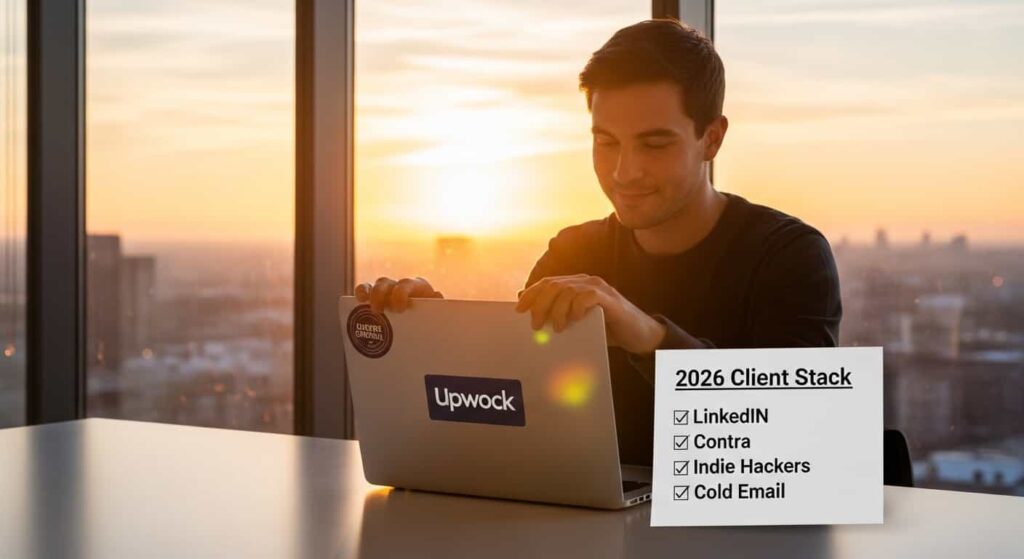
Upwork trained a generation of developers to be reactive — to wait for listings, to bid, to hope. The platforms and strategies above require you to be proactive, specific, and patient. The reward is clients who value your work, pay fair rates, and come back.
The best time to diversify off Upwork was two years ago. The second-best time is today.